5 picks · vetted plastic-free
The best plastic-free travel mugs
Glass, steel and ceramic-lined cups that keep hot coffee off plastic. Nearly every travel lid is plastic, so we tell you which part your lips touch.
A disposable coffee cup is paper lined with plastic, and its lid is polystyrene or polypropylene. Hot liquid is the worst case for plastic contact. Researchers who boiled water in plastic measured particle release climbing steeply with heat, and a travel cup holds coffee at that temperature for the length of a commute.
The cups below hold the drink in glass, stainless steel or a ceramic lining. Almost every leakproof or splashproof lid on the market is polypropylene, and these are no exception, so each listing names its lid material. Glass tastes cleanest and cools fastest. Steel keeps coffee hot for hours.
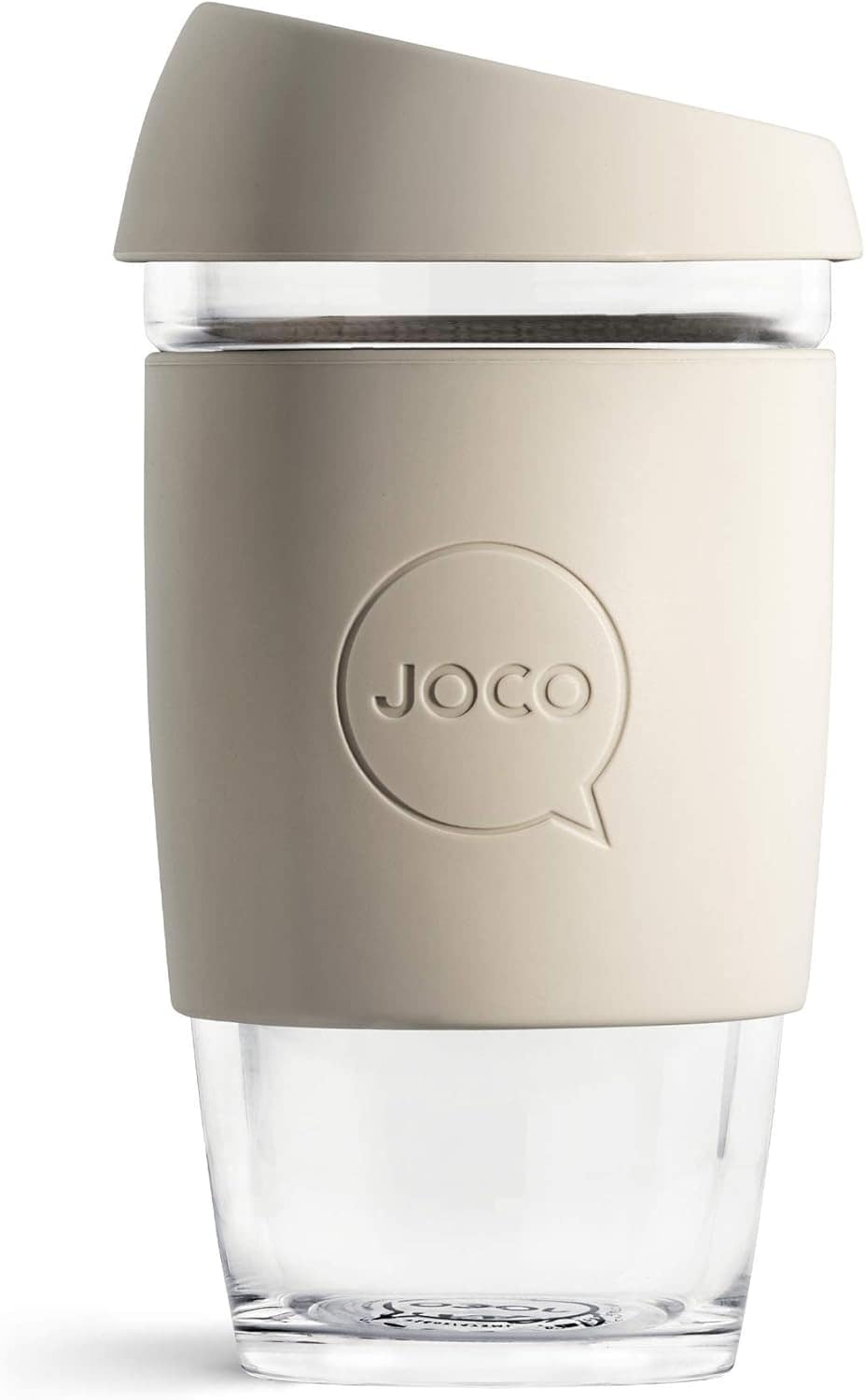


Common questions
- Are KeepCups microwavable?
- The glass ones are. KeepCup says to microwave the Brew with the lid off up to 212°F, and it rates the Brew Cork microwave safe to the same temperature. The plastic Original can go in with the lid off too. The steel KeepCups, Thermal, Traveler and Commuter, can't go in the microwave.
- Is there a travel mug with no plastic at all?
- Not one with a sealing lid that we have found. KeepCup, Klean Kanteen and Fellow all list a polypropylene or BPA-free plastic lid. The cup itself can be all glass or steel, which is where the coffee sits, and drinking with the lid off keeps your coffee on glass or steel.
- Is Klean Kanteen plastic free?
- The TKWide body is 18/8 stainless steel, 90% of it recycled according to Klean Kanteen. The Café Cap is polypropylene, silicone and stainless steel, so your coffee touches plastic at the lid.
- Does a ceramic-lined mug taste better than steel?
- Ceramic doesn't add a metallic edge, which is why Fellow lines the Carter Move with it. Glass gives the same clean taste but loses heat faster, so it suits coffee you'll finish within half an hour.
Sources
- Drinking Boiled Tap Water Reduces Human Intake of Nano- and Microplastics · Environmental Science & Technology Letters (ACS) (2024)
- Plastic Teabags Release Billions of Microparticles and Nanoparticles into Tea · Environmental Science & Technology (ACS) (2019)
- Microplastics Are Everywhere. Here's How to Avoid Eating Them. · NYT Wirecutter (2024)