5 picks · vetted plastic-free
The best plastic-free water filters and non-plastic gravity systems
Filtering tap water cuts microplastics, but only if the clean water isn't then stored in a plastic tank. These use glass and steel.
Filtering your tap water is one of the most effective microplastic swaps there is, since tap already beats bottled and a good filter takes out much of what remains. But most popular filter jugs store the filtered water in a plastic reservoir, so the water you worked to clean then sits in plastic until you drink it.
The filters below keep the clean water in glass or stainless steel. That matters most for the water you drink all day, and it pairs with the simplest habit of all: in hard-water areas, boiling then filtering has been shown to remove up to about 90% of nano- and microplastics.
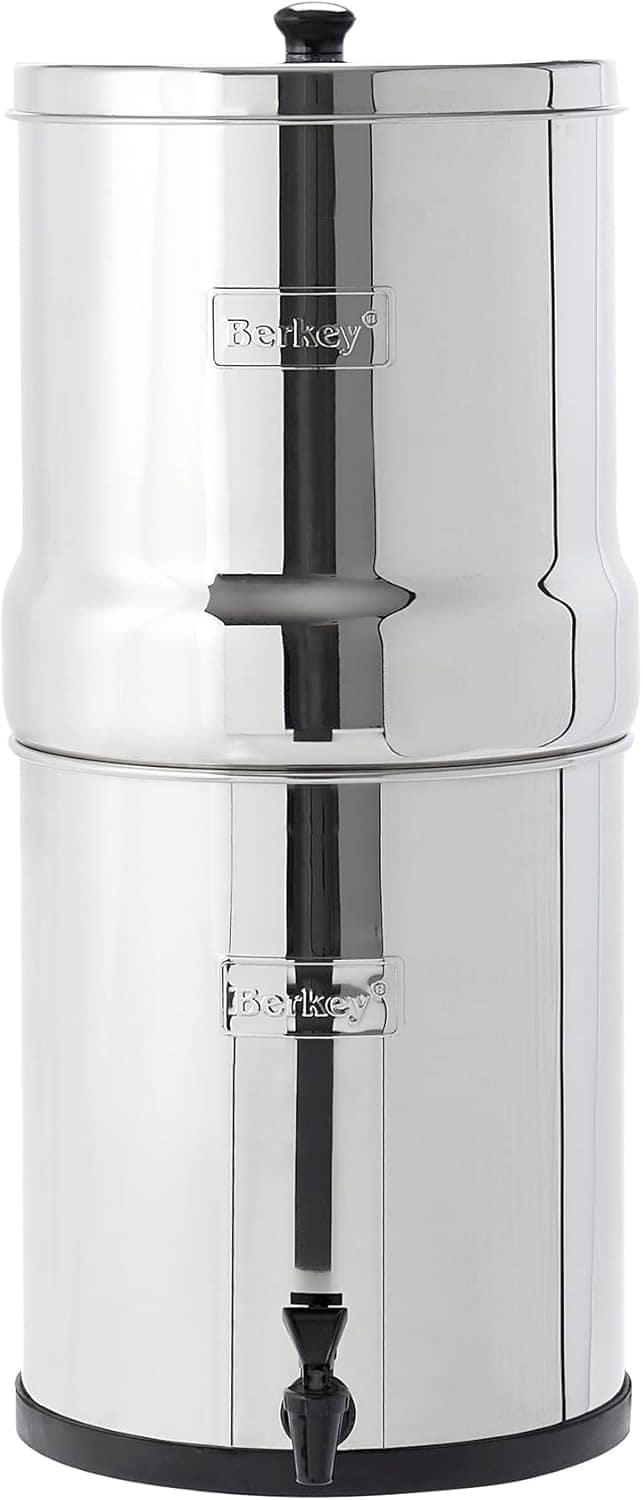
A truly non-plastic water filter comes in two shapes. Gravity systems hang ceramic elements inside a stainless housing, so water on its way down touches metal and mineral. Glass pitchers do the same job at counter scale, with steel where the cartridge sits.



Common questions
- Is there a truly non-plastic water filter?
- Yes. A stainless gravity system with ceramic elements keeps every wetted surface metal or mineral, and a glass pitcher with a steel cartridge does the same at pitcher size. When you compare models, check the spigot and the lid gasket, because those are the two parts where plastic sneaks back in.
- Do water filters remove microplastics?
- Most microplastic particles are larger than the pore sizes of common carbon-block and gravity filters, so a good filter captures a substantial share. The gravity systems here use dense ceramic or hollow-fibre elements that also handle a wide range of other contaminants.
- Why does the container material matter?
- Because storage time is long. Water sits in the jug between pours, so a plastic reservoir means your filtered water is in contact with plastic for hours a day. Glass and stainless steel remove that last exposure, which is why we favour them over plastic-tank pitchers.
- Is a gravity filter better than a faucet filter?
- Gravity systems filter more thoroughly and store more, at the cost of counter space, and they need no plumbing or power. A glass-carafe pitcher is the lower-footprint everyday option. Both beat drinking straight from the tap or, worse, from bottled water.
- Does boiling water remove microplastics?
- In hard water, substantially: a 2024 study found boiling then filtering precipitated out up to about 90% of nano- and microplastics, because the particles bind to the limescale as it forms. It is a near-free habit to add on top of a filter.
Sources